Building a resilient business: how Lynton Peters scaled OneCart to a Walmart acquisition
A great idea can be worth millions, but how do you build a business that delivers? Founder Lynton Peters shares what he learnt scaling OneCart from a side hustle to a Walmart acquisition, and the leadership lessons that came with 400% year on year growth, a pandemic, and a landmark exit.
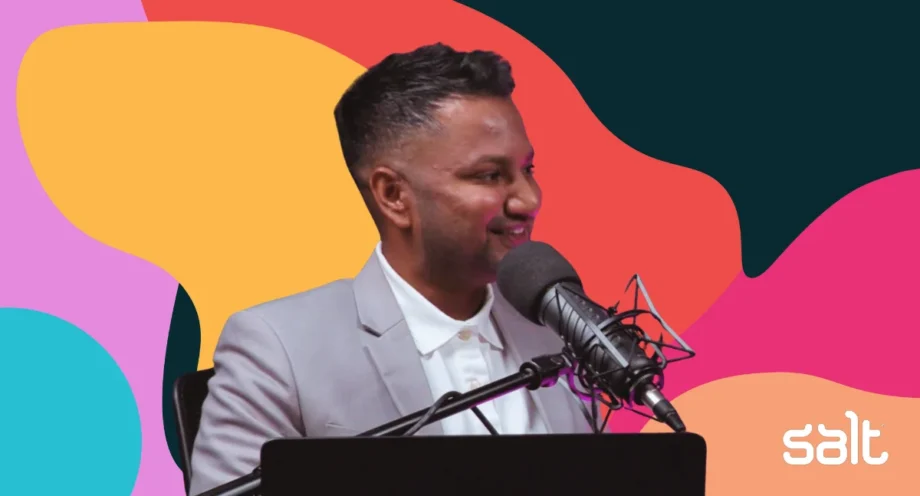
In 2024 Salt spoke with Lynton Peters, founder and former CEO of OneCart, about building a business that delivers: from the idea that started on a Saturday morning grocery run to the decision to sell to Walmart.
Lynton’s journey from corporate consultant to accidental entrepreneur reflects the reality most founders face: not a single defining leap, but a series of deliberate, unemotional decisions. In an industry where hype often outpaces substance, he explains why resilience, culture and clear eyed analysis matter more than the idea itself.
The accidental entrepreneur
Lynton doesn’t describe himself as someone who always knew he’d found a company.
“I always say I kind of became an accidental entrepreneur.”
Early in his career, working as an engineer in the lab, his ambitions looked conventional: chief engineer, maybe a partner track at a consulting firm. That changed when he moved to Singapore at 26.
“I saw what it was like, and had the experience of being on the other side of the table.”
Surrounded by founders building fast moving products, something shifted. He didn’t have the idea yet, or a plan, just a pull toward building something of his own.
Where the idea for OneCart actually came from
The idea itself came out of pure inconvenience. Living in Singapore, Lynton and his friends spent their Saturday mornings doing the weekly grocery run after a Friday night out: one stop for groceries, another for wine, a trip to the farmer’s market.
“This really took most of the morning away.”
Standing in yet another queue, the thought landed:
“How cool if you could develop a product where you shop from multiple stores and get it delivered quicker than you can actually do it yourself.”
At the time, 2016, grocery delivery in South Africa took five days. Lynton, still working in consulting, ran the numbers as a skeptic first: was next day delivery even technically feasible? Partway through his research, he found a U.S. company chasing the same idea with a few hundred million dollars in funding behind it.
“I was like, okay, so I’m not that crazy.”
Taking the leap from corporate to founder
Leaving a partner track role in consulting for an unproven idea was, in Lynton’s words, “probably one of the toughest decisions that I had to make.” Rather than jumping in cold, he moved in phases: building a rough prototype at night after work, then cutting his hours to start looking for a co-founder and early investment, then bringing on his first hires while still working part time. Only after the business had been operating for about six months did he go all in as full time CEO.
His first hire, his co-founder, set the tone for the culture that followed.
“I told him about the business, and he was like, ‘Man, this is crazy. I don’t think it’s going to work, but I’m keen to do it.’”
That mix of skepticism and commitment is exactly who he hired for in OneCart’s early days: versatile people who wanted to be part of something a little unreasonable.
Scaling through chaos: 400% growth and a pandemic
OneCart’s hiring strategy evolved as fast as the business did. Early on, it was about generalists who could wear multiple hats. As the company scaled, Lynton had to build a proper core team, hiring specifically into tech, marketing and operations, while protecting the culture that got them there. A single core value, customer centricity, kept every function aligned, and a deliberately flat structure meant “it wasn’t a typical corporate structure.”
By the time OneCart had grown to roughly 200 people in the office and close to a thousand shoppers and drivers across the country, the business itself was compounding fast.
“Since the inception, the business was growing between 400 to 600% year on year.”
Then COVID hit, and growth jumped into four digit percentages almost overnight. At one point, the team hired around 300 shoppers or drivers in two weeks.
“We had moved our forecast, sort of, five years into the future.”
That kind of growth was validating, and it created a new problem: OneCart suddenly needed far more capital than originally planned to survive and expand aggressively.
The decision to sell
To fund that expansion, Lynton took OneCart out to raise strategic capital. Partway through the process, one investor came back with a different proposal entirely: not a minority stake, but full ownership, at the right time.
“I would say everything’s for sale at the right price,” he says of his mindset going in, but the actual decision wasn’t simple.
Lynton had to weigh shareholder returns, a team who’d been with him for years and held equity of their own, and what the business genuinely needed to reach its next stage, against the backdrop of COVID and a rapidly shifting market.
“Thinking about all of this, it became clearer, and it was a decision that we took.”
That decision led to OneCart’s acquisition by Walmart: a landmark exit for a South African founded startup, and one Lynton says required exactly the unemotional, numbers first thinking he’d apply to any major business decision.
What hasn’t changed about founding a company
Lynton is clear that some things about founding a business have shifted hard since 2016: the speed of technological change, and a post COVID expectation that teams will work remotely and globally. These days, he says, founders are working with teams that are global whether they like it or not, and just have to figure out how to make that work.
But some things haven’t moved. Every company still needs a visionary, “the evangelist, pretty much exactly like Steve Jobs”, and every founder needs real mental resilience.
“You’re going to go through so many ups and downs, probably ten times over. It’s easy to lose faith.”
Is it easier to be a founder today than in 2016? Lynton calls it a double edged sword: better tools and more distributed collaboration on one hand, higher expectations from people entering the workforce on the other.
“People are looking for more purpose these days, and used the right way, that can be amazing.”
Advice for the next generation of founders
Whatever your background, engineering, marketing or consulting, Lynton’s advice to would be founders starts with taking emotion out of the evaluation.
“Separate emotion out of it, and really analyse: does this business have potential?”
His checklist:
- Does this idea have a real business model that can generate returns?
- How big is the market, realistically?
- How much of that market do you actually want to capture?
- Who are the international players you can benchmark against?
That last point mattered to him personally: finding another company chasing a similar idea overseas was part of what convinced him OneCart wasn’t a crazy bet.
Life after OneCart
Lynton stepped down as CEO in February 2023, after five years of intense building, and took a deliberate break, spending the first year of his son’s life with him and exploring ventures outside tech, including opening a cocktail bar. With more than 15 years across engineering, consulting, innovation, entrepreneurship and investment, he’s now focused on advising founders and corporates through scale up challenges, while keeping an eye out for the right next opportunity to apply that experience at scale.
Lynton’s story is a reminder that resilience, not certainty, is what actually gets founders through the ten times over ups and downs of building a company. From a Saturday morning grocery run in Singapore to a Walmart acquisition, the throughline is the same: separate emotion from decision making, hire for culture and passion over polish, and know exactly what you’re building toward, including when it’s time to let it go.
For founders navigating their own scale up decisions, Lynton’s approach is a reminder that clarity beats conviction: know your numbers, protect your culture, and separate the emotion from the exit.