Women in the Workplace Progress Report 2026: Measuring True Inclusion
Progress for women in the workplace is often measured by how inclusive organisations feel. But a growing gap is emerging between rising perceptions of inclusion and the slower pace of structural change.
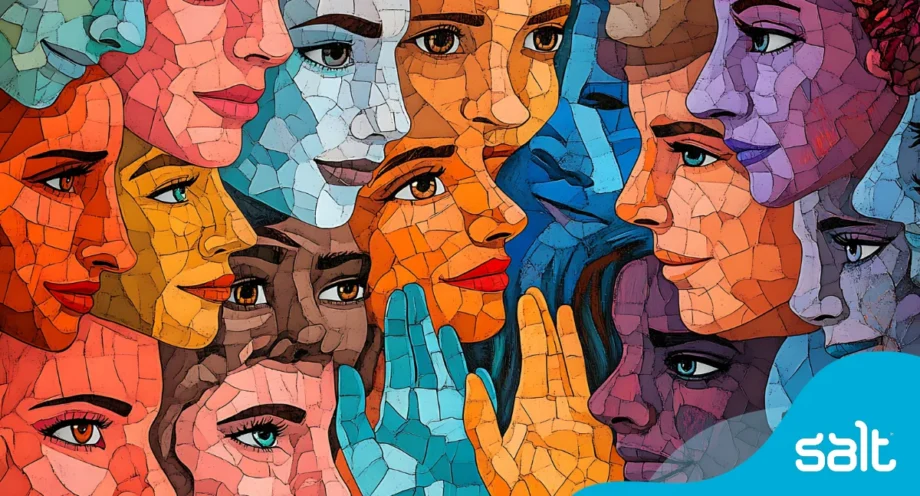
Across nearly 8,000 participants over two years, our 2026 Women in the Workplace progress report reveals a growing disconnect. More organisations describe their workplaces as inclusive. Yet the structural signals behind career progression tell a more complicated story. Culture remains the dominant barrier, leadership representation is still uneven, and active allyship is declining.
TL;DR: Women in the workplace progress report 2026 – Key findings
- Inclusion sentiment has improved modestly year-over-year.
- Structural barriers (culture, representation, accountability) remain largely unchanged.
- The largest year-over-year shifts show cultural barriers increasing (+7pts) and active allyship declining (-4pts).
- 57% say women remain under-represented in leadership.
- 67% say flexibility would make the biggest difference.
Taken together, these figures suggest that while perception may be improving, structural friction persists. This widening gap between rising sentiment and slower structural change reflects what we describe as a perception-progress gap. The question is not whether progress exists. It is whether it is happening where it matters most.
Culture: the system beneath the system
When just under half (49%) identify culture as the primary barrier to women’s professional progression – and that figure has increased by seven percentage points year-on-year – this is not noise. This is a community doubling down on a systematic diagnosis. Culture is not one factor among many. It is not soft tissue. It is the environment in which every other barrier either thrives or is dismantled.
“Culture sets the tone for everything. If culture is the primary barrier, meaningful progress in removing or dismantling other barriers becomes significantly harder.” Jacqui Barratt, CEO and Founder, Salt APAC
The real question is not whether your organisation values women or builds this into its culture. It is what happens in the room when no one is watching? Who gets credited? Who gets doubted? Who gets sponsored quietly? Culture can be the manager who talks over someone. It can be the meeting where an idea lands only when someone else repeats it.
Limited promotions (19%), pay disparity (16%), and lack of advocates (16%) all clustered far below culture in this year’s poll. With Culture dominating at 49%, everything else clusters beneath it. Reinforcing that culture isn’t one barrier among many; it’s the root system that all others grow from.
Some professionals who commented on our poll noted that there is still a strong cliché that a woman cannot handle managing positions. “Practice shows that women can perfectly handle multiple tasks and perform a creative approach in urgency and unpredictable failures. I believe that cliché remains in the past and progress of the hiring process and corporate culture inclusion will facilitate equity based on skills metrics and not prejudices.”
This commentary is critical; cultural bias often begins before promotion is even in play. Assumptions about competence shape hiring decisions, role allocation and succession planning. By the time progression becomes the focus, inequity may already be embedded.
McKinsey’s Women in Workplace 2025 report reflects the same tension, noting that while many organisations prioritise inclusion rhetorically, fewer explicitly prioritise women’s advancement. Inclusion is often framed as a shared value, but advancements require structural redesign.
If culture is the dominant barrier for the second consecutive year, and is growing, not shrinking, acknowledging the problem is not enough. An inclusive workplace culture cannot exist if progression barriers persist. When culture stalls, policies will struggle to make any difference. So, if culture shapes progression, who is shaping the culture? And are you ready to challenge the status quo?

Company Culture is more than a Pizza Party
Leadership representation: who shapes the system?
The illusion of inclusivity is one of the most harmful aspects of today’s workplace landscape. While companies and employees claim to champion diversity, equity, inclusion, and belonging, our poll results reveal a different reality. Women’s workplace experiences are vastly different from what most companies believe they offer.
In our women in the workplace report last year, we asked: Are we doing enough? This year, we took it further with our poll on leadership, looking specifically at leadership. 57% of professionals said women remain underrepresented. The answer is still no.
27% say there are some women in leadership, but not enough. 21% report very few. 9% say none at all. That’s one in three respondents to our survey stating that women are barely present or absent in senior roles within the organisations they work in.
To ensure a balanced global perspective, we gathered this data from Salt’s LinkedIn audience. As a result, respondents are self-selecting and are more likely to work, or have worked, in professional, DEI-aware organisations. That context matters. These are former employees, employees, and leaders within organisations proactively contributing to conversations about equality and equity. If representation gaps are this visible within relatively progressive circles, gaps in the broader landscape are likely to be wider.
Beyond this, the 43% who report leadership as ‘well represented’ reflects meaningful progress. The more pressing question is who those respondents are – and from what types of companies. Representation in high-performing or diversity-forward companies does not negate imbalance elsewhere.
Leadership representation for women is not symbolic. It determines who defines performance standards, distributes opportunity, shapes succession pipelines, and sets the norms others are expected to follow.
When leadership remains uneven, systems tend to reproduce themselves.
The women in leadership results connect directly to the company culture findings from the previous poll. If 49% identify company culture as the dominant barrier to progression – and culture is shaped by leadership behaviour – then underrepresentation is not separate from the problem. It is part of its mechanism.
Culture cannot meaningfully evolve without changes in representation among those shaping it. Efforts that place the responsibility on women to simply adapt, “lean in,” or behave more like existing leadership models overlook the structural realities many women navigate – including unequal expectations around invisible labour and caregiving responsibilities
Other global research reflects the same pattern. McKinsey reports that women hold just 29% of C-suite roles globally, and that the “broken rung” at the first promotion continues to narrow the pipeline early. Structural gaps at senior levels are cumulative – shaped by hiring, sponsorship, and promotion decisions repeated over time.
The first fracture often occurs much earlier than organisations expect. The “broken rung” describes the first promotion from entry-level roles into management – a moment that shapes everything that follows in the leadership pipeline. According to McKinsey’s Women in the Workplace 2025 report, for every 100 men promoted into their first management role, only 93 women are promoted. For Asian and Latina women, that number drops to 82, and for Black women, it falls to 60.
Bianca Errigo, Founder of HumanOS, argues that this early break in the pipeline helps explain why representation gaps persist even as awareness increases.
“The pipeline doesn’t leak at the top — it fractures at the beginning. Culture as the dominant barrier, declining allyship, and underrepresentation are often the same issue appearing at different stages of a woman’s career. The rung breaks not through overt discrimination but through assumptions about who ‘looks like’ leadership potential.”
– Bianca Errigo
These structural barriers also extend beyond corporate leadership. Female-founded businesses receive a disproportionately small share of venture capital funding globally, highlighting how representation challenges persist even when women step into entrepreneurial leadership roles.
If more than half of our respondents still report insufficient representation – and nearly a third describe severe underrepresentation – this suggests the issue is not temporary. It is structural.
Culture does not shift independently of those shaping it. If you influence hiring, promotion, or succession planning, you influence whether that culture continues to stagnate or evolve.

Can I meet the woman in charge?
Flexibility: structural, not personal
Our second new poll for this year was striking. When asked which policy would make the biggest difference for women at work, 67% of nearly 2,000 respondents selected flexibility. Leadership followed at 15%, parental leave at 14%, and just 3% identified training as the most important intervention.
The distribution tells a clear story – one reinforced by the small number of respondents who selected training. The community is not asking to be fixed. It is not asking for more workshops, confidence courses, or upskilling initiatives aimed primarily at individuals. Instead, respondents are signalling that environmental conditions – such as flexibility and supportive workplace policies – are what enable talent to thrive
As observed in our poll, the answer depends on the woman. Some prioritise parental leave, others leadership access or development, “but to assume that ALL women want or need parental leave is to disregard women who may not have that option, whether by choice or for medical reasons. Clearly, the answer is yes, to all.”
Flexibility is not a single demographic solution. It benefits people building full lives outside of work. From studying, navigating health, and lifestyle changes to caring for family. Or simply needing space to exist beyond a job title. This benefits everyone, not just women.
“People often jump to the conclusion that flexibility simply means working from home, but flexibility actually means different things to different people. It might be different hours, stepping away from work early to support family responsibilities, or making space to return to or pursue formal education. And, for many jobs, working from home isn’t possible, which means flexibility needs to extend beyond location.”
– Jacqui Barratt
The fact that so many conversations about flexibility begin with parental policy, rather than workforce design, is itself a cultural assumption worth interrogating. Women carry a disproportionate share of the invisible labour, from caregiving to domestic coordination that doesn’t clock off at 5 pm. Flexibility is needed because that invisible load exists. But if flexibility were offered consistently to everyone, this load could be more evenly distributed, with a real strategy for flexibility coded as a tool for productivity and autonomy, not a tool for work/family conflict.
Another reflection from our social reporting added another dimension: “If we have more women in leadership roles, setting the policies, then the flexibility we need, the reduction in the gender pay gap, ageism, and the ‘things’ we face could be rectified at source.”
That insight is important, but also raises a harder question. Why should flexibility depend on who happens to sit in leadership? If flexibility strengthens retention, performance, and engagement, it should not require demographic alignment to justify it.
The question is no longer whether flexibility is valued — it’s needed. The real question is: does your culture embrace flexibility, or quietly penalise it?
Allyship in the workplace: intention or intervention?
Supporting women’s careers is still the most reported form of allyship – but it is slipping. 42% selected it this year, down from 46% last year.
More concerning is the decline in speaking out against discrimination, dropping by 4% from 19% to 15%. Actively confronting bias was already the least selected action. It is now the smallest share by a clearer margin.
Listening (23%) and amplifying voices (19%) together account for 42% of responses; these supportive actions matter, but it carries less personal risk.
The gap between intention and intervention grows
Our 2025 report identified speaking up as the hardest form of allyship. The latest results suggest that difficulty may be increasing.
Speaking out against discrimination declined from 18% in 2025 to 15% in 2026, making both the least selected action and the only one to move decisively in the wrong direction. This is not simply a statistical footnote. It raises a more uncomfortable question: why is the most proactive form of allyship becoming less common?
Part of the answer may lie in risk. Challenging bias in real time can disrupt meetings, strain professional relationships, and place the person speaking up in an uncomfortable spotlight. In environments where psychological safety is uncertain, silence often feels safer than intervention.
But culture plays a role here too. When organisations signal that inclusion matters yet fail to reinforce it through leadership behaviour and accountability, employees receive mixed messages. If bias is rarely challenged at senior levels, it becomes harder for others to do so.
The wider business environment may also be shaping this shift. Over the past year, diversity, equity, and inclusion initiatives have become increasingly politicised in several major markets, leading many global organisations to scale back DE&I programmes or dismantle dedicated functions.
These developments have reinforced a broader social narrative that inclusion is negotiable rather than structural. As that narrative spreads, allyship can become more cautious and less visible.
Yet culture is not shaped by belief alone; it is also shaped by behaviour.
When a biased comment goes unchallenged, when credit is misattributed, or when hiring decisions pass without scrutiny, the silence reinforces the norm. This responsibility does not sit only with leadership. It sits with the collective.
“I believe that silence is equivalent to complicity. If we want to shape culture, we have to find our voice in real time. When bias of any kind goes unchallenged, it doesn’t just persist – it signals to those displaying it that others agree and support their perspective.”
Jacqui Barratt
If speaking up feels harder than it did a year ago, the question is not whether you care. It is what are you prepared to risk to change the outcome?
The performative inclusion trap
When asked, “Do you feel your workplace is inclusive for women?”, the share of respondents selecting “somewhat inclusive” has remained effectively unchanged for two consecutive years – 26.5% in 2025 and 27.0% in 2026. This is the most revealing figure in the dataset, as it points to a significant middle ground where inclusion is perceived to exist, but not consistently or convincingly
“Are we ticking boxes or making change?”
The middle has not shifted. And the middle is where policy and lived experience often diverge. It represents companies that have statements, frameworks, and initiatives in place, but where progression, representation, and cultural behaviour may not yet reflect those intentions.
Fully inclusive has improved slightly, from 50.8% to 53.0%. Superficially, that suggests improvement, yet “not at all inclusive” has also gone from 6.2% to 7.0%. What we are seeing is not transformation, it is modest improvement at best and stagnation at worst.
Workplace inclusion cannot be measured by sentiment alone. Perception may be improving, but structural conditions appear slower to follow. And this poll sits at the centre of it all:
- 49% identify company culture as the dominant barrier to progression.
- 57% say leadership representation remains insufficient.
- 67% select flexibility as the policy that would make the biggest difference.
- Only 15% say they actively speak out against discrimination.
These findings can’t be assessed in isolation, because together they describe a system under tension.
If culture is the primary barrier and leadership representation continues to shape that culture unevenly, while flexibility is still constrained by consequence, and active accountability is weakening, then inclusion can’t be measured solely by how it feels. It must be measured by what is changing.
Inclusion can be declared. Advancement must be shown. Representation must be visible, and behaviour must reinforce stated values. Two years of data now suggest a pattern: awareness is present, intent is visible, but structural change is incremental.
“Feeling positive about inclusion and doing something about it are very different behaviours, and organisations tend to reward the former while rarely holding anyone accountable for the latter.”
– Bianca Errigo
This does not mean progress is absent, but it does mean it is slower than many assume. Progress should now be measured by how inclusive your company feels, but by whether the barriers are shrinking.
If culture still shapes progression, leadership representation is uneven, flexibility carries consequence, and allyship softens under pressure, then progress cannot be assumed. Comfort is not progress. The question is not whether you support inclusion. It is whether you are willing to change the systems that determine outcomes.
Methodology
- Approximately 8,000 respondents across 2025–2026
- Survey distributed via LinkedIn audience
- Self-selecting professional sample
- Data reflects perception rather than weighted workforce representation
- Year-over-year comparisons based on consistent question framing
Discover more women in the workplace articles
Bookmark our workplace inclusion reports hub